Short Range Devices (SRD) are radio devices that offer a low risk of interference with other radio services, usually because their transmitted power, and hence their range, is low. Short range devices often benefit from a relaxed regulatory regime compared with other radio communications equipment. As a general principle, a user is license free to operate such equipment, some specific cases may require an individual license.
However, like all radio equipment, short-range devices have to meet national regulations requirements published by Communications Regulatory Authority (CRA) to be placed on the market within Iran.
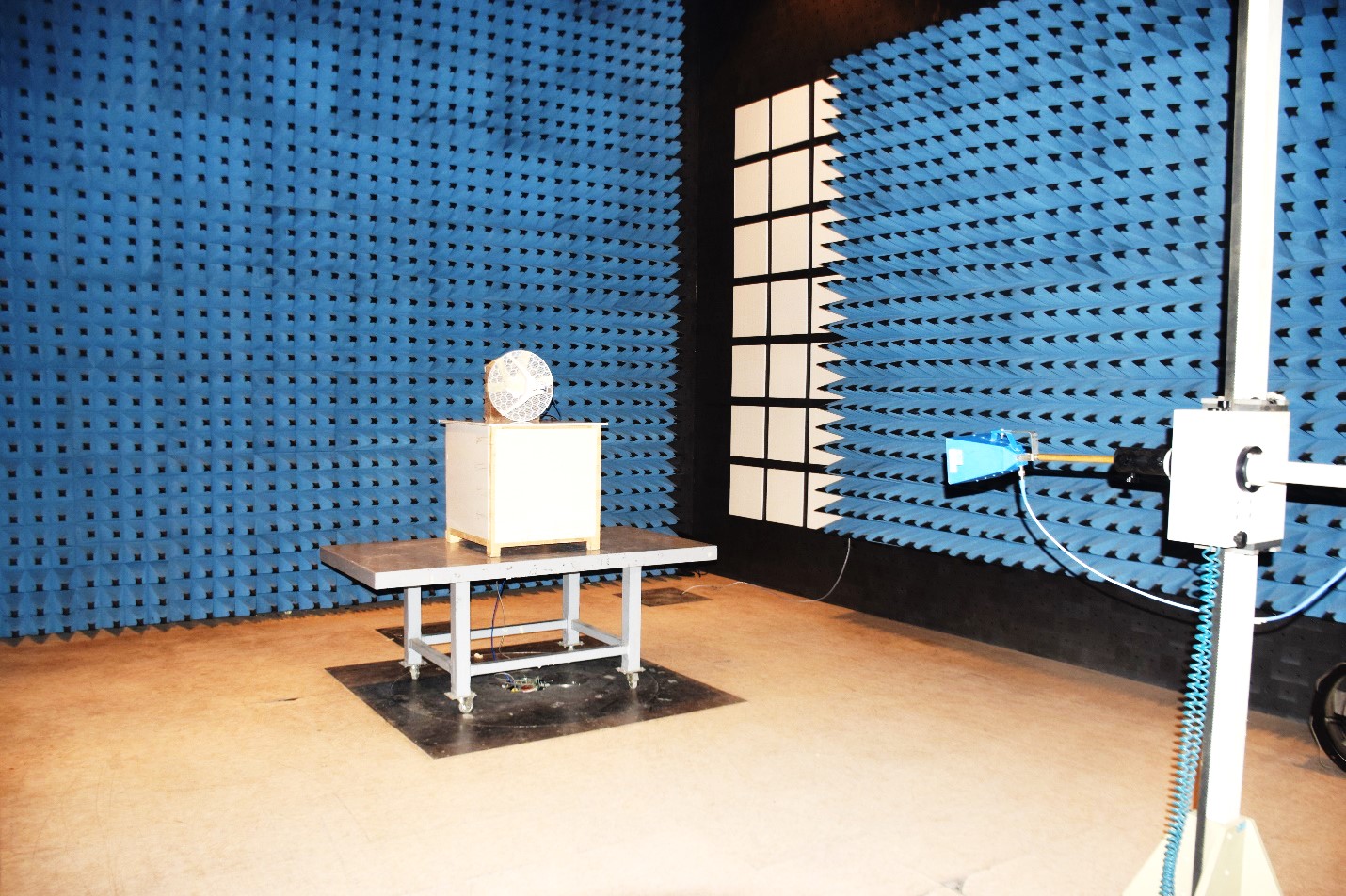
To determine compliance or non-compliance with these requirements, testing and measurement are required in accordance with standards. In the SRD laboratory of the Research Center of Informatic Industries (RCII), by using modern technology, precision measuring equipment, and relying on knowledge and experience, it is possible to perform these tests with national and international standards.
This laboratory has ISO17025 certification from the National Certification Center of Iran, and a certificate from the Communications Regulatory Authority (CRA).
Some of the technologies and equipment that are included in these tests are: Bluetooth, WiFi, RFID, wireless remotes, wireless microphones, NFC, wireless sensors, wireless chargers, alarm, Zigbee and other similar technologies.
The most important parameters that are tested in the SRD laboratory of the Informatics Research Center are:
RF Output Power, EIRP or ERP
Operating Frequency
Power Spectral Density
Modulation Parameters
Occupied Channel Bandwidth
Transmitter Unwanted Emissions
Channel Spacing
Transmitter H-Field
Duty Cycle
Adjacent Channel Power
Adaptive Power Control
Transient Power
SRD tests are performed based on national, regional, and international standards and technical regulations of Communications Regulatory Authority (CRA).